
Research, Surveys, Evaluation & Project Impact Assessment
At Matrix Society, rigorous research and evaluation are not afterthoughts — they are built into every program from day one. We measure impact, learn from data, and continuously improve our interventions.
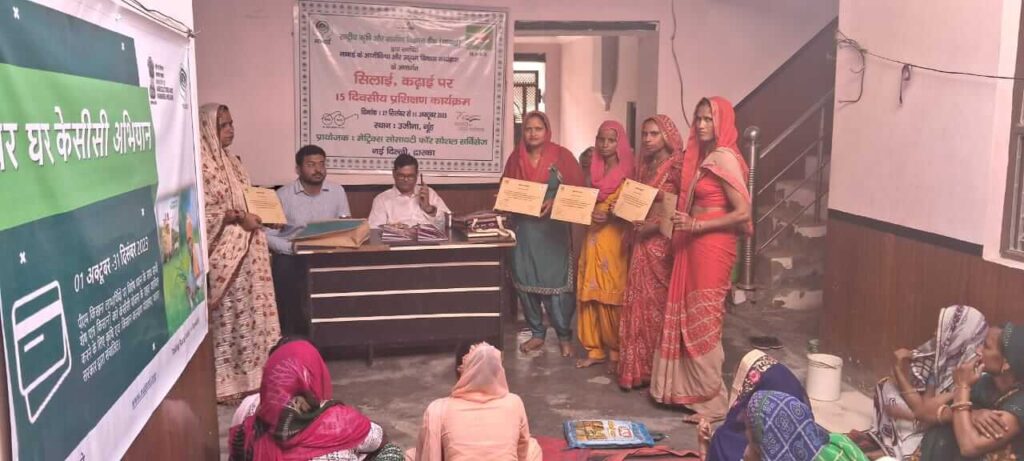
Data-Driven Development for Lasting Impact
Research and surveys form the primary stage of Matrix Society’s program
selection and formulation process. Before implementing any intervention or project in any region, we conduct thorough research and survey the entire project location — keeping in mind the core objectives and the unique socio economic context of each community.
We maintain a robust evaluation mechanism on par with national and international organisations working in the non-profit sector. We strictly follow and adhere to standard norms and guidelines for project evaluation, and we also conduct third-party evaluations for other organisations’ projects on invitation. All our projects undergo mandatory baseline
surveys, mid-term evaluations, and end-line impact assessments.
Impact assessments are conducted after project completion and submitted to supporting organisations for a comprehensive understanding of the program’s reach and outcomes. Matrix Society also offers independent third-party impact assessment services for other NGOs, CSR projects, and government programs — providing credible, objective evaluation backed by two decades of fieldwork experience.
Why It Matters
The Importance of Evidence in Development
- Without rigorous research and evaluation, development programs risk misallocating resources and missing their intended beneficiaries entirely.
- Baseline surveys establish the starting point and define measurable success indicators for every project before it begins.
- Mid-term and end-line evaluations allow programs to course-correct and maximise impact in real time.
- Independent impact assessments build credibility and trust with donors, CSR partners, and government bodies.
- Results-based evidence is essential for replicating successful models and scaling impact across communities and geographies.
- Participatory research ensures communities are co-owners of the development process — not just passive recipients of external programs.
- Audit findings are addressed within six months of the audit report — demonstrating our commitment to accountability and transparency.
Our Research & Evaluation Services
Baseline Surveys
Comprehensive surveys conducted at the start of every project to establish measurable benchmarks across social, economic, health, and educational
parameters — providing the foundation for outcome measurement.

Needs Assessment
Community-level needs assessment exercises using participatory tools like PRA, FGDs, and key informant interviews to identify priority areas and ensure programs address real community needs.
Mid-Term Evaluation
Structured evaluation of ongoing projects at the midpoint to assess progress against targets, identify implementation challenges, and recommend course corrections for improved outcomes.
End-Line /Impact Assessment
Post-project impact assessments measuring outcomes, behavioural changes, and community-level impact — submitted to donors and partner
organisations with detailed findings and recommendations

Third-Party Evaluation
Independent third-party evaluation services offered to other NGOs, CSR programs, and government projects on invitation — providing objective, credible assessments free from implementation bias.
Research Studies
Commissioned and self-initiated research studies on thematic areas including child development, water resources, livelihood, and health — such as the comprehensive SOS Children’s Village study in Haryana
Survey Design & Implementation
End-to-end survey design, field tool development, enumerator training, field implementation, data entry, quality checks, analysis, and report writing for community and project-level surveys.

Data Collection & Management
Systematic data collection, management, and analysis using standardised tools and internationally recognised evaluation methodologies including OECD-DAC criteria.
Our Projects
SOS Children's Village
- Haryana
State Research Study, Haryana Details: Matrix
Society conducted a comprehensive research study titled “SOS Children’s Village in State
of Haryana”, covering villages and the child population of Haryana. The study covered all
socio-dynamic aspects of child development — analysing the current situation of children
on multiple parameters including nutrition, education, family stability, protection, and
access to welfare services. Findings were submitted to SOS Children’s Villages
International with detailed recommendations.
Supported By: SOS Children’s Villages
International

Baseline & Impact Assessment
- Haryana
Jaldoot Program, Haryana Details: Comprehensive baseline survey of over 900 villages in Nuh District for water availability,
groundwater levels, rainwater harvesting potential, and irrigation facility access. End-line impact assessment submitted to NABARD documenting measurable changes in water management practices, infrastructure improvements, and community capacity after
intervention — covering both Nuh (475 villages) and Gurugram (274 villages) districts.
Supported By: NABARD — National Bank for Agriculture and Rural Development
Evaluation & Impact Assessment
- Haryana, Uttar Pradesh, Bihar, and Madhya Pradesh.
Skill Development Programs Details:
Pre-training baseline assessments and post-training impact evaluations conducted for all skill development programs — tracking employment rates, income changes, skill retention, and beneficiary satisfaction across multiple trades and locations including Haryana, Uttar Pradesh, Bihar, and Madhya Pradesh. Reports submitted to REC, GAIL, RAILTEL, L&T, and Ministry of Textiles.
Supported By: REC | GAIL | RAILTEL | Larsen & Toubro | Ministry of Textiles
Community Surveys
Healthcare Programs Details: Pre-intervention
and post-intervention surveys conducted for all healthcare programs — including health
camps, cancer screening drives, and mobile medical van programs across 8+ states. Surveys assess healthcare access, health awareness levels, and behavioural changes among beneficiary communities, with findings submitted to respective donors.
Supported By: ONGC | NHPC | Indian Oil | IRCTC
Participatory Needs Assessment & PRA
- Mewat, Haryana
Rural Development Programs, Mewat Details: Participatory Rural Appraisal (PRA) activities and community needs assessments conducted across Mewat Region of Nuh District as part of the village development program. PRA tools including transect walks, resource mapping, seasonal calendars, and community ranking exercises were used to ensure community ownership of development priorities and plans.
Supported By: NABARD — National Bank for
Agriculture and Rural Development
FPO Performance Evaluation
- Nuh, Haryana
Nuh District, Haryana Details: Regular
performance evaluation of 8 Farmer Producer Organisations (FPOs) formed in Nuh District
— tracking membership growth, financial performance, market linkages, commodity
aggregation volumes, and farmer income changes. Evaluation reports are submitted to
NABARD for review and continuation of support, helping guide FPO strengthening
strategies.
Supported By: NABARD — National Bank forAgriculture and Rural Development
Third-Party Impact Assessment Services
Multiple Organizations Details: Matrix Society conducts independent third-party project impact assessments for other NGOs, foundations, and CSR programs on invitation. These include end-line evaluations, outcome measurement, and social return on investment (SROI) analysis for programs across education, livelihood, healthcare, and environment sectors — providing objective, credible evaluation free from implementation bias.
Supported By: Various NGOs and CSR Partners — On Invitation
SHG Performance & Impact Assessment
- Haryana & UP
Haryana & UP Details: Regular monitoring and impact assessment of over 5,000 Self Help Groups formed and strengthened by Matrix Society across Uttar Pradesh, Haryana, NCT of Delhi, Rajasthan, and Bihar. Assessments track savings behaviour, loan repayment, income changes, women’s decision-making authority, and overall quality of SHG functioning.
Supported By: NABARD | NULM | Rural Electrification Corporation